
Franchise vs Own Business in India: What Factors Should First-Time Entrepreneurs Consider?

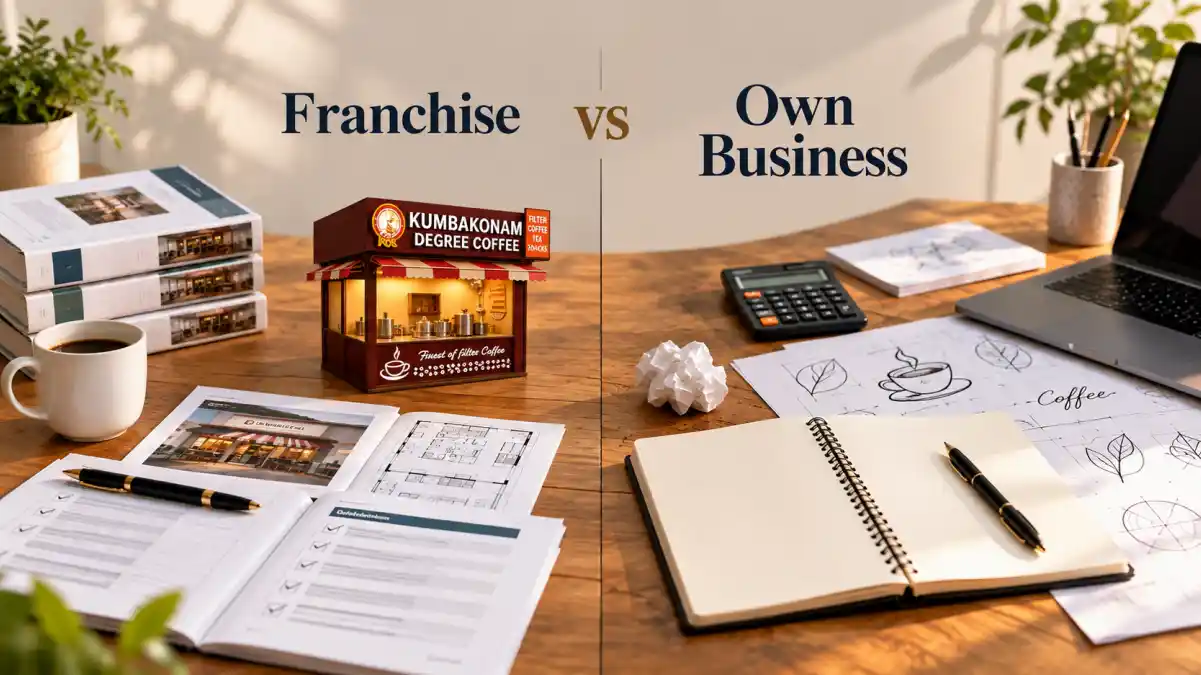
Are you planning to start your first business but confused whether to take a franchise or starting your own business? Which option needs more investment? Which one gives better support? And which business model will be easier to understand and manage when you are entering business for the first time?
These are common questions for many new entrepreneurs in India. Starting your own business gives you the freedom to create your own brand, products, pricing and way of working. On the other side, a franchise business gives you an existing brand, business model, training and different levels of operational support, depending on the company you choose.
For many first-time entrepreneurs, a franchise can feel more practical because they do not have to plan every single part of the business independently. However, this does not mean every franchise is suitable or that success is guaranteed. The better question is not simply: “Is a franchise better than owning a business?” Instead, ask: “Which business model matches my budget, experience, location, interest and long-term goal?”.
In this guide, we will explain the difference between a franchise vs owning a business in India in simple terms so that you can understand both options before making an investment decision.
Table of Contents
Franchise vs Own Business in India: What Is the Main Difference?
A franchise business allows you to operate under an existing brand and follow its business system, while your own business gives you complete responsibility for creating the brand and operations yourself. Both models have advantages, but they require different levels of experience, independence and decision-making.
What Is a Franchise Business?
In a franchise model, an existing company, called the franchisor, allows another person, called the franchisee, to operate a business using its brand name and business system. Depending on the company, a franchise may provide support for outlet setup, staff training, products, branding, operations, marketing, technology and supply arrangements. For a person entering business for the first time, this existing structure can reduce some of the confusion involved in planning everything independently.
However, taking a franchise does not mean the company will run the outlet completely for you. The franchise owner is still responsible for managing staff, serving customers, controlling expenses and looking after daily operations.
What Is an Own or Independent Business?
An own business is built under your own name or brand. You decide the products, pricing, logo, shop design, suppliers, marketing activities and future business direction without following another company’s franchise system. This can be attractive for entrepreneurs who have good industry knowledge, a different business idea or an interest in building their own brand over time. However, almost every system has to be created or arranged by you.
You may need to handle branding, supplier selection, pricing, staff training, marketing, customer acquisition, quality control and daily operations independently. For first-time entrepreneurs, managing all these areas together can sometimes become challenging.
Franchise Business vs Own Business – Quick Comparison
When comparing franchise business vs own business, do not look only at the initial investment. You should also compare brand recognition, customer trust, training, business freedom, marketing, operational guidance, recurring expenses and the amount of time needed to establish the business in your local market.
|
Factor |
Franchise Business |
Own Business |
|---|---|---|
|
Brand Recognition |
Start with an existing brand that customers may already know and trust. |
Build your own brand and create customer trust over time. |
|
Business model |
Follow an established business model with defined systems and processes. |
Create and develop your own business model based on your ideas. |
|
Training & Guidance |
Training and business guidance may be provided by the franchisor. |
You need to arrange training and learn the business independently. |
|
Shop Setup |
Store layout, branding and setup guidelines may already be available. |
You need to plan the shop design, layout and setup yourself. |
|
Products & Services |
Products and service standards are usually already decided by the brand. |
You can decide and change your products or services based on your market. |
|
Marketing Support |
Brand-level marketing support, creatives or promotional guidance may be provided by Franchisor |
You are responsible for creating and managing your complete marketing strategy. |
|
Customer Trust |
Existing brand awareness may help attract customers from the beginning. |
Customer awareness and trust need to be built gradually. |
|
Business Control |
You operate within the franchise brand's rules and business standards. |
Control your own |
1. Compare the Full Investment, Not Only the Franchise Fee
Many new entrepreneurs compare only the franchise fee with the cost of opening their own shop. A better approach is to calculate the complete amount needed to open and operate the business comfortably, including setup, rent, staff, stock, licences, marketing and working capital.
What Costs Can Come With a Franchise?
A franchise investment may include various parts depending on the company and business model. The total cost may include the franchise fee, outlet interiors, equipment, rental deposit, licences, initial stock, technology, staff training, marketing and working capital. Some franchise brands may also charge royalties or other ongoing fees.
Before making a decision, ask the franchise team clearly what is included in the quoted investment and what needs to be paid separately. This is particularly important when the website states that the investment “starts from a specific amount”.
What Costs Come With Starting Your Own Business?
Starting your own business may help you avoid a franchise fee, but there are several other expenses that you need to handle independently. You may need money for brand name development, logo, shop design, equipment, supplier research, products, packaging, website, staff training, local marketing and customer promotions. You may also spend more during the early stage because certain decisions may need to be changed after testing them in the real market.
2. How Much Control Do You Want in Your Business?
A key difference between a franchise and your own business is the level of control. Some entrepreneurs enjoy creating new products, designs, and offerings, while others prefer to follow an established business model rather than making every decision from the beginning.
An Established Franchise System Gives You a Clear Direction
When you enter the franchise business, you typically receive clear guidelines on aspects such as store setup, branding, product manufacturing, service quality, suppliers, and marketing activities. If you are comfortable following the brand’s approach, this helps a new entrepreneur easily understand the day-to-day operations.
Starting Your Own Business Requires More Self-Learning
When you create an independent business, you need to decide how products will be prepared, how employees will be trained, where materials will be purchased and how customers will be handled. You may need to learn through research, professional advice, trial and practical experience.
This learning can help you build strong business knowledge over time, but a beginner should be ready to spend more time understanding different areas of the business.
3. Consider How Customers Will Know and Trust Your Business
A good product alone may not bring customers immediately. Whether you choose a franchise or your own business, people need to know that your shop exists and understand why they should visit. The difference is how much brand awareness and customer trust already exist.
An Established Franchise May Already Have Brand Value
If customers already know the franchise brand, recognise its products or have visited its outlets elsewhere, your new outlet may benefit from that existing awareness. This can be helpful when opening in a new location, because you are not introducing a completely unknown name. However, achieving brand recognition does not automatically guarantee sales. Factors such as Shop visibility, location, customer service, pricing, and local demand are still important.
An Independent Business Needs Time to Build Customer Trust
Starting your own brand gives you freedom, but you also need to introduce the business to customers from the beginning. This can require consistent local marketing, social media activity, reviews and promotions. A franchise with an established name may have an advantage because customers could already know the brand.
4. Choosing the Right Location Matters for Both Franchise and Own Business
A good location is important for both a franchise business and an independent business. Even a popular brand may struggle in the wrong place. Check footfall, customer type, visibility, rent, competitors, parking and nearby commercial activity before deciding where to open your outlet.
5. Compare Marketing Support and Customer Acquisition
Many first-time entrepreneurs think marketing simply means opening an Instagram page or distributing flyers. In reality, a business needs regular customer awareness, local visibility and repeat purchases, so the marketing responsibility of both franchise and independent business models should be clearly understood.
Understand What Marketing Support a Franchise Provides
Before choosing a franchise, understand what kind of marketing support the brand provides. This may include promotional creatives, social media content, launch campaigns, marketing materials and local promotion guidance. For a first-time entrepreneur, this support can save time and make marketing easier. However, the franchise owner may still need to handle local promotions and customer engagement.
Your Own Business Needs Its Own Marketing Plan
When you start your own business, you are responsible for building its visibility and attracting customers. This can include your business name, logo, website, Google presence, digital marketing, social media, customer offers, paid promotions and online customer reviews. You have more freedom, but marketing needs regular effort, planning and budget.
6. Quality and Food Safety Matter When Choosing a Food Business
When comparing your own business with a food franchise in India, also consider how product quality and safety will be managed. A clear quality system can help maintain customer experience, reduce operational confusion, and build better trust in your outlet.
FSSAI Registration Is an Important Part of Starting a Food Business
FSSAI registration and licensing are important parts of setting up a food or beverage business in India. The requirement can change based on the nature and scale of the operation. For new entrepreneurs, choosing a franchise with proper setup guidance can make this stage easier to understand, while all legal requirements should still be verified through official channels.
An Own Brand Must Build Its Own Quality System
If you start your own coffee or food business, you need to set clear standards for recipes, ingredient sourcing, hygiene, storage, portion size and staff training. Creating these systems takes time, while an established franchise may already provide tested processes that help maintain more consistent product quality.
A Franchise Can Offer Ready Product and Quality Guidelines
An established franchise may already have tested methods for preparing products, selecting equipment and sourcing key materials. This can make daily operations more straightforward, especially for beginners. It also helps the franchisee focus more on customer service, staff management and local business growth.
7. Strong Franchise Support Can Help to Simplify Daily Operations
One important reason entrepreneurs explore franchise opportunities is the support available behind the business. Instead of developing every process independently, a franchise owner may receive guidance for setup, training, products, operations and marketing, depending on the brand.
8. Think About Your Long-Term Business Plan
Your decision should not be based only on how quickly you can open a shop. Think about where you want to be after three, five or even ten years. Your preference for brand ownership, business expansion, creative freedom and structured support should influence your choice.
9. What First-Time Entrepreneurs Should Check Before Taking a Franchise
For a first-time entrepreneur, a franchise can offer useful guidance and an already developed business system. Still, it is important to understand the investment, training, location requirements, product quality, ongoing support and daily responsibilities before selecting a franchise that matches your budget and business expectations.
Ask for the Complete Investment Details
Do not ask only, “What is the franchise fee?” Ask for the complete expected investment, including setup, equipment, interiors, rent deposit, initial products, licences, working capital and any other applicable charges. This will give you a more realistic idea of the amount needed before the outlet starts operating.
Read and Understand the Franchise Agreement
The franchise agreement explains the rights and responsibilities of both parties. Check important areas such as agreement duration, renewal, territory, termination, brand usage, supplier conditions and transfer of ownership. For a major investment, taking independent legal or financial advice can help you understand the agreement better.
Speak With Existing Franchise Owners If Possible
Talking to existing franchise partners can help you understand the practical side of running the business. Instead of asking only about income, ask about training, product supply, employee management, communication with the franchisor, local customer response and the type of ongoing support they receive.
How Should a First-Time Entrepreneur Choose Between the Two?
Instead of searching for one answer that applies to everyone, compare both options based on your experience, available investment, need for support, willingness to follow a system, interest in creating a brand and ability to manage day-to-day business responsibilities before making your final decision.
A Franchise May Be Suitable If You Prefer More Guidance
You may seriously consider a franchise if you prefer starting with an existing brand, established products and an organised operating system. This can be helpful when you are new to entrepreneurship and want guidance on important areas such as setup, training, products and daily operations. You should still compare different franchise opportunities carefully and choose only after proper research.
Your Own Business May Suit You If You Want Full Independence
Your own business may be suitable when you already have a clear idea and want full control over your products, brand, pricing and marketing. It can also suit people who already understand the industry and are confident about creating their own systems. Remember that independence also means handling every major business decision yourself.
Planning to start a Coffee Business? Compare Both Options Practically
If you are interested in India’s growing coffee and beverage market, your question may become “Should I start my own coffee shop or take a coffee franchise?” Compare the options based on investment, location, products, customer demand, training, supply and operational responsibility.
Starting Your Own Coffee Shop
When you start your own coffee business, you need to decide the brand name, coffee products, menu, sourcing, shop design, pricing and customer experience. This gives you full creative freedom and a chance to build your own coffee brand. At the same time, you need to establish product consistency, staff training, suppliers and customer trust from the beginning.
Choosing an Established Coffee Franchise
A coffee franchise may be worth considering when you prefer an existing brand, established products, business guidance and a more structured setup process. This can be especially useful for a first-time entrepreneur who is interested in the coffee business but does not have previous café or food-service experience. Before choosing any brand, compare the investment, outlet size, location requirements, product quality, support system, existing outlets, and franchise agreement carefully.
Looking for a Compact Coffee Franchise? Kumbakonam Degree Coffee Is Worth Exploring
For entrepreneurs who prefer a smaller-format coffee business instead of a large café, a franchise can provide a more structured way to enter the market. Kumbakonam Degree Coffee combines a recognised South Indian filter coffee identity with compact outlet options that may suit different commercial locations.
Established Presence in the Filter Coffee Market
Kumbakonam Degree Coffee has focused on traditional South Indian filter coffee since 2007. The brand currently states that it operates through 302+ outlets, giving prospective franchisees an established business network to study before making an investment decision.
Entry Starts With a Compact Business Format
KDC currently mentions franchise investment starting from around ₹6 to 8 lakh, with certain formats requiring approximately 70–100 sq. ft. Entrepreneurs should confirm the latest package directly, but these smaller formats can make the opportunity easier to evaluate.
Business Support Matters as Much as Initial Cost
A lower starting cost alone should never decide a franchise investment. Support can be equally important. KDC states that it assists franchise partners with location guidance, setup, training, operations and marketing, which can be useful during the initial business stage.
Check Existing Outlets and Understand the Business Better
Before choosing any franchise, it is useful to look at existing outlets and understand how the business works in real locations. Kumbakonam Degree Coffee has outlets across several markets in South India and also has an international presence in Kuala Lumpur, Malaysia. You can explore the KDC outlet network, understand the brand’s different locations and, where practical, visit an outlet before deciding whether the franchise model matches your expectations.
A Simple Six-Step Method Before You Invest
A first-time entrepreneur should avoid selecting a business only because it looks attractive on social media or because someone says the opportunity is limited. A better approach is to understand your budget, study the location, compare models and verify important information before investing.
Step 1 — Understand What Type of Business Owner You Want to Be
Think about whether your main interest is creating your own brand or running a business using an already established brand and system. If building your own identity is your main dream, an independent business may suit you. If you prefer guidance and an existing system, a franchise may be worth exploring.
Step 2 — Fix a Comfortable Investment Budget
Decide how much you can invest without creating unnecessary pressure on your personal finances. Your calculation should include not only setup cost but also working capital for the first few months. A business opportunity may look attractive, but it should also fit comfortably within your financial capacity.
Step 3 — Study Your Location Properly
Observe the area at different times of the day and understand customer movement. Check rent, nearby businesses, parking, visibility and competition. For a coffee outlet, also understand whether the location has regular office workers, students, travellers, families or local residents who may become repeat customers.
Step 4 — Compare More Than One Opportunity
Do not select the first franchise or business idea you come across. Compare at least a few options using similar factors such as investment, support, location requirements, brand recognition, products, operating involvement and recurring expenses. This makes the decision more balanced.
Step 5 — Verify Important Information
Check the agreement, existing locations, investment details, licence requirements and business responsibilities. If required, discuss the opportunity with an accountant, legal adviser or experienced business owner. Verification is especially important when you are investing a major part of your savings.
Step 6 — Choose Based on Suitability, Not Urgency
Do not invest simply because someone says another person may take the location tomorrow. A good opportunity should still make sense after you study the numbers, responsibilities and risks calmly. Your first business decision should be based on understanding, rather than on stress or excitement.
Final Thoughts: Franchise or Own Business — Which One Fits You?
There is no single winner in the franchise vs own business comparison. Your own business gives greater freedom, while a good franchise can provide valuable brand recognition, systems and support. For a first-time entrepreneur, that structure can make the starting journey more organised and understandable.
Before deciding, think carefully about your investment, location, available time, experience and long-term goal. If you enjoy creating products, building a new brand and making every business decision yourself, an independent business may be a suitable path. If you are more comfortable working with an existing brand, following a tested operating system and receiving support in areas such as setup and training, a franchise can be a practical option to explore.
Most importantly, do not choose any business only because somebody says it is profitable. Study the opportunity, understand the responsibilities and choose a model that you can manage properly for the long term.
If you are specifically interested in entering the South Indian filter coffee business, you can explore the Kumbakonam Degree Coffee franchise opportunity, understand the investment and space requirements, look at existing outlets and speak with the franchise team before deciding whether the model suits you.
A good business decision is not about starting quickly. It is about choosing a business you understand, believe in and are prepared to manage responsibly.
Frequently Asked Questions About Franchise vs Own Business in India
Choosing your first business can bring many doubts about cost, freedom, support and business responsibilities. These frequently asked questions will help you understand how franchise and independent business models differ, and why structured franchise support can be useful for some new entrepreneurs.
Is a franchise better than starting my own business?
A franchise can be useful if you want an existing brand, established products, operating guidance and support. Your own business gives you more freedom and full ownership of the brand you create.
The better option depends on your experience, budget, business idea and preferred level of support.
Is a franchise good for a first-time entrepreneur?
A franchise can be a practical option for first-time entrepreneurs because some brands provide training, setup guidance, products and operating systems. This can reduce the number of things you need to create yourself. However, you still need to manage the outlet responsibly and understand the investment before joining.
Do I need business experience to take a franchise?
Not necessarily. Many franchise opportunities are suitable for first-time entrepreneurs because the brand may provide training, operating guidance and ongoing support. Previous business experience can be helpful, but willingness to learn, manage people and follow the business system is often equally important.
How much money is needed to start a franchise in India?
There is no fixed amount because franchise investments vary depending on the brand, business category, shop size and city. While comparing opportunities, calculate the total investment, rental deposit, setup cost and working capital, not only the franchise fee.
How much does a Kumbakonam Degree Coffee franchise cost?
Kumbakonam Degree Coffee currently states that franchise investment starts from approximately ₹6 to 8 lakh. The final amount may depend on the outlet format, property, and setup requirements. Interested entrepreneurs should confirm the latest investment details directly with the franchise team before making a decision.
How much space is needed for a Kumbakonam Degree Coffee franchise?
Kumbakonam Degree Coffee offers a compact franchise format that can work with approximately 70–100 sq. ft. of space. This can be useful for entrepreneurs exploring smaller commercial locations. The final suitability depends on visibility, customer movement and shop layout, which can be reviewed with the franchise team.
Does Kumbakonam Degree Coffee provide franchise support?
Kumbakonam Degree Coffee states that franchise partners receive support in areas such as location selection, outlet setup, training, operations and marketing guidance. Before joining, prospective franchisees should discuss what support is included and understand their own responsibilities as the outlet owner.
How can I enquire about a Kumbakonam Degree Coffee franchise?
If you have decided that a franchise model suits your business plans, you can visit the Kumbakonam Degree Coffee franchise page and submit your details. Before enquiring, it is useful to have a basic idea about your preferred city, available investment and whether you already have a commercial location.