
Filter Coffee vs Instant Coffee: Convenience or Great Taste – Which Would You Choose?


Have you ever wondered why filter coffee has such a strong aroma compared to instant coffee, or whether the extra time spent on brewing it actually makes a difference in taste?
Both filter coffee and instant coffee start with coffee powder, but the process before it reaches your cup is different. One is freshly brewed from coffee powder, while the other has already been brewed, concentrated, and dried for convenience.
If you are deciding between South Indian filter coffee and instant coffee, which coffee should you choose? This guide compares them by preparation, flavour, aroma, caffeine, convenience, and everyday use. We will also guide you on how to choose the right coffee for you – instant coffee or traditional filter coffee, without complicating your morning routine. The quick answer is If speed and convenience are your top priorities, nothing beats instant coffee.
If you value freshly brewed coffee, rich aroma, flavor control, and the traditional South Indian coffee experience, filter coffee offers a great taste to customize every cup you like. There is no need to consider either of these as the “best” choice that suits everyone. The right choice depends on factors such as how you drink your coffee, how much time you have, and your taste preferences.
Table of Contents
What Is Filter Coffee?
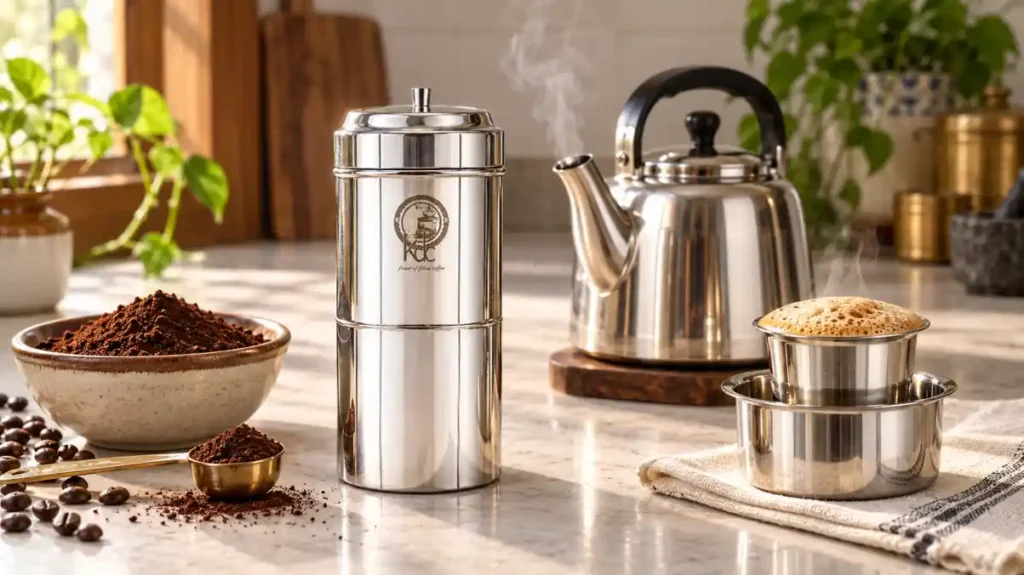
Filter coffee is prepared by passing hot water through ground coffee in a traditional metal coffee filter, resulting in a thick decoction. In South Indian households, this decoction is typically mixed with hot milk and sugar (if desired), creating a wonderful coffee with a delightful aroma and a unique, traditional taste.
How South Indian Filter Coffee Is Prepared
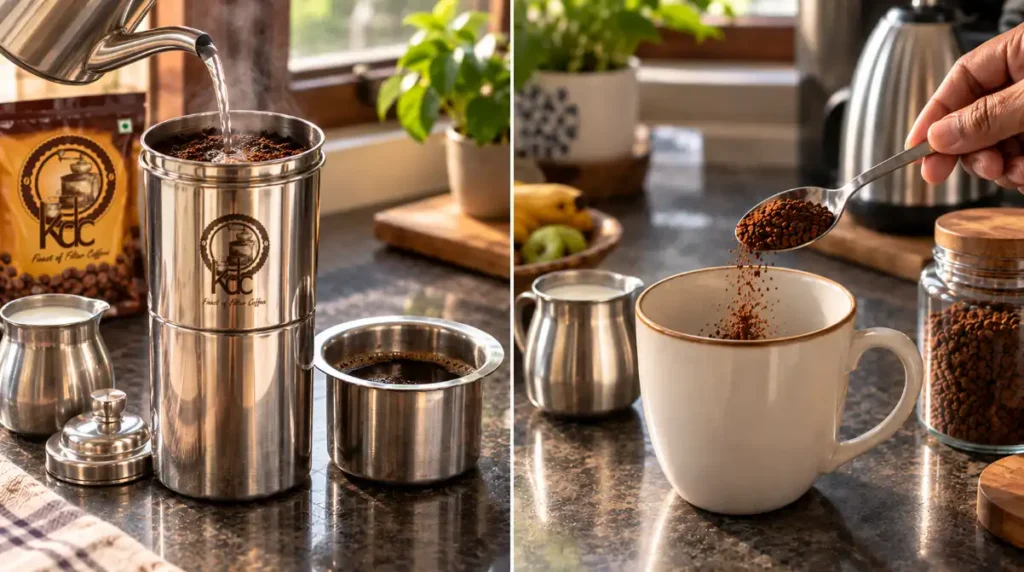
Traditional South Indian filter coffee typically uses a two-chamber stainless steel filter. Coffee powder is placed in the upper chamber, and hot water is poured over it; the resulting decoction then slowly collects in the lower chamber. You can adjust the prepared decoction to your taste using the following:
- Hot milk
- Sugar or other sweeteners
- Quantity of decoction (more or less)
- Different coffee-to-chicory ratios
What Makes Filter Coffee Different?
Filter coffee is deeply connected to the traditional South Indian coffee experience. A strong decoction, hot milk, inviting aroma, sweetness and the familiar tumbler-and-dabara serving style combine to create a rich, comforting cup that feels very different from the quick preparation of instant coffee.
What Is Instant Coffee?
Instant coffee is made from brewed coffee that is concentrated and dried into soluble powder or granules. Making a cup is simple—just add hot water or milk and stir. Its biggest advantage is quick preparation and convenience, especially for busy mornings, office breaks, or travel.
How Is Instant Coffee Made?
Ever wondered how instant coffee becomes so quick to prepare? Coffee is first brewed in larger quantities before most of the water is removed. Processes such as freeze drying or spray drying turn the brewed coffee into lightweight, soluble granules or powder.
Simply add hot water or milk, and the coffee dissolves within seconds. This is why making instant coffee requires very little preparation.
That is why instant coffee requires:
No coffee filter
No extraction period
Very little cleaning
Minimal preparation time
For office desks, travel or quick morning, that simplicity can be useful.
Filter Coffee vs Instant Coffee: Quick Comparison
The easiest way to compare filter coffee and instant coffee is to look at what matters during everyday use: brewing time, freshness, aroma, flavour depth, equipment, customization, and convenience. Neither format suits everyone, because each solves a different coffee-drinking need.
|
Key Difference |
Filter Coffee |
Instant Coffee |
|---|---|---|
|
Preparation |
Brewed fresh from ground coffee |
Mixed directly with hot water or milk |
|
Preparation time |
Takes a few minutes for the decoction to brew |
Ready within 1 or 2 minute |
|
Taste & Aroma |
Rich aroma with a deeper, freshly brewed flavour |
Mild, consistent flavour designed for convenience |
|
Strength adjustment |
Can be adjusted with decoction and milk |
Can be adjusted by adding more or less coffee powder |
|
Equipment needed |
Usually requires a traditional coffee filter and filter coffee powder |
Needs only a cup and hot water or milk |
|
Coffee–chicory options |
More option available in ratios such as 90:10, 80:20, 70:30 and 60:40 |
Depends on the type and brand of instant coffee |
|
Coffee experience |
Offers a traditional, freshly brewed coffee-making experience |
Focuses mainly on speed and convenience |
|
Best suited for |
People who enjoy authentic flavour, aroma and traditional brewing |
People who prefer quick coffee at home, work or while travelling |
Key Differences Between Filter Coffee and Instant Coffee
Filter coffee and instant coffee may look similar in the cup, but their preparation is very different. Filter coffee is brewed fresh from ground coffee, allowing flavours to develop naturally, while instant coffee is already brewed, dried, and designed to dissolve quickly for convenience.
1. Brewing Process
Filter coffee is brewed fresh using ground coffee and hot water. As the hot water slowly passes through the coffee powder, it extracts the flavour and aroma to create a rich coffee decoction. Instant coffee works differently—it is already brewed and dried during production, so you simply dissolve it in hot water or milk.
2. Taste and Aroma
One of the biggest pleasures of filter coffee is the fresh aroma that fills the kitchen while it brews. The flavour can be strong, smooth, or milky depending on how you prepare it. Instant coffee is simpler and more predictable, making it a practical choice for busy mornings.
3. Freshness
When it comes to freshness, filter coffee and instant coffee offer different experiences. Filter coffee is brewed from ground coffee when you prepare your cup, allowing its aroma and flavour to develop during brewing. Instant coffee is already brewed and dried, making it convenient for quick, consistent preparation.
4. Convenience
Instant coffee is convenient because you can prepare it quickly with almost no effort. There is no filter to set up or decoction to wait for. Filter coffee takes a little more patience, but many people enjoy preparing it slowly and making the cup exactly the way they like.
5. Customisation
Traditional filter coffee allows you to experiment with:
Coffee strength
Decoction quantity
Milk quantity
Sweetness
Coffee-to-chicory ratio
Brewing time
That additional control is especially useful when you are trying to create a cup that matches your preferred strength and flavour.
Is Filter Coffee Healthier Than Instant Coffee?
When it comes to health, filter coffee and instant coffee can both be part of a balanced lifestyle. What matters more is how you drink your coffee—how much sugar or milk you add, your serving size, your total caffeine intake, and how your body responds to caffeine.
What Really Matters When Choosing Your Coffee?
When you choose coffee from a health point of view, it is useful to look beyond whether you are drinking filter coffee or instant coffee. What you add to your cup and how often you drink it also matter.
Consider:
Daily coffee consumption
Sugar added to each cup
Milk or cream quantity
Cup size
Your sensitivity to caffeine
Total caffeine from other drinks
Coffee contains naturally occurring compounds, including caffeine, but the effect can vary from person to person depending on individual tolerance and drinking habits.
Which Has More Caffeine: Filter Coffee or Instant Coffee?
When comparing filter coffee vs instant coffee caffeine, the answer depends on how each cup is prepared. Factors such as coffee bean variety, serving size, coffee quantity, brewing method, and decoction strength can change the caffeine level. Strong filter coffee may sometimes contain more caffeine per serving.
Why the Caffeine in Your Coffee Is Not Always the Same
Ever wondered why one cup of coffee feels stronger than another? A small glass of South Indian filter coffee and a large mug of instant coffee may look very different, but cup size alone does not decide how much caffeine you are drinking.
Caffeine levels depend on:
Coffee quantity
Bean variety
Serving volume
Extraction
Strength of decoction
Milk-to-coffee ratio
According to the U.S. FDA, around 400 mg of caffeine a day is generally considered an amount that most healthy adults can tolerate without negative effects. Still, every person reacts differently.
If a cup of coffee keeps you awake at night or leaves you feeling uncomfortable, your personal response to caffeine matters more than whether the coffee is instant or filter brewed.
Which Offers a Richer Taste: Filter Coffee or Instant Coffee?
If you enjoy a fresh aroma and fuller flavour, filter coffee may feel more satisfying. Brewing from ground coffee lets you adjust the strength, milk, and sweetness to your liking. Instant coffee is quicker, but traditional filter coffee offers a more personalised coffee experience.
Choose Filter Coffee If You Enjoy
Fresh coffee aroma
Strong decoction
Traditional South Indian flavour
Adjustable milk-to-coffee ratio
Different coffee and chicory blends
Brewing coffee as part of your morning routine
Choose Instant Coffee If You Prefer
Very quick preparation
Easy office coffee
Minimal cleaning
Travel convenience
Predictable preparation

Ready to Move From Instant Coffee to Traditional South Indian Filter Coffee?
Switching from instant coffee to South Indian filter coffee is easier than it may seem. You only need a traditional coffee filter, a filter coffee blend that suits your taste, and a simple brewing routine. After a few cups, you can adjust the decoction, milk and sweetness exactly the way you enjoy it.
Step 1: Start With a Traditional Coffee Filter
You do not need an expensive coffee machine to make filter coffee at home.
A simple stainless-steel South Indian coffee filter allows hot water to slowly extract flavour from freshly ground coffee and collect a rich decoction below. If you are just getting started, choosing the right-sized traditional coffee filter makes home brewing simple and convenient.
Step 2: Choose a Filter Coffee Blend That Matches Your Taste
Your coffee powder makes a noticeable difference to the final cup.
Kumbakonam Degree Coffee offers different coffee-to-chicory ratios, including 90:10, 80:20, 70:30 and 60:40, along with pure coffee options.
If you prefer more coffee character, begin with a higher coffee percentage. If you enjoy a fuller traditional decoction profile, you can explore blends with more chicory.
Step 3: Master One Simple Brewing Method
Add your coffee powder to the filter, pour in hot water and allow the decoction to collect. Keep your measurements similar during your first few attempts so you can understand the flavour and strength of the coffee.
Adjust it until the right taste you like it
Once brewed, customise the cup with:
More or less decoction
Hot milk
Sugar
Frothing
When you find the combination you enjoy, filter coffee becomes just as easy to include in your daily routine.
Ready to start brewing? Explore Kumbakonam Degree Coffee filter coffee powders, traditional filters and coffee essentials for your first home-brewed cup.
New to Filter Coffee? Start With the Right Blend That Matches Your Taste
Ready to bring South Indian filter coffee into your daily routine? Start by choosing a blend that matches your preferred strength and flavour. From Pure Coffee to 90:10, 80:20, 70:30 and 60:40, each option gives you a different brewing experience at home.
1. Pure Filter Coffee Powder – Choose It If You Want 100% Coffee
Looking specifically for coffee without chicory? Start with our Pure Coffee Powder. It is the straightforward choice for shoppers who want a coffee-only blend and prefer the roasted coffee character to remain prominent in every brew.
2. 90:10 Filter Coffee Blend – Choose It for a Coffee-Dominant Cup
Want plenty of coffee character with just a small amount of chicory?
The 90:10 coffee–chicory blend keeps coffee dominant while introducing chicory gently, making it an appealing option for people beginning to explore traditional South Indian blends.
3. 80:20 Filter Coffee Blend – Choose It for Everyday Home Brewing
Looking for a balance between coffee character and traditional chicory? The 80:20 filter coffee blend gives you another everyday option to explore and can be a comfortable starting point for people discovering South Indian filter coffee at home.
4. 70:30 Filter Coffee Blend – A Different Traditional Balance
If you enjoy a richer traditional character, the 70:30 filter coffee blend adds more chicory while still keeping coffee at the heart of the brew. It can suit customers who prefer a stronger-bodied decoction, especially when their coffee is enjoyed with hot milk.
5. 60:40 Filter Coffee Blend – For a More Chicory-Forward Cup
For customers who already enjoy coffee with a more substantial chicory proportion, 60:40 filter coffee powder gives you another distinct option.
Brew it through a traditional filter and adjust the decoction-to-milk ratio until it suits your cup.
Ready to try traditional filter coffee at home? Explore Kumbakonam Degree Coffee filter coffee blends and choose the strength that matches your taste.
Frequently Asked Questions About Filter Coffee vs Instant Coffee
What is the main difference between filter coffee and instant coffee?
The main difference is preparation. Filter coffee is freshly brewed from ground coffee powder, while instant coffee is previously brewed and dried so it dissolves quickly. If you value fresh preparation and more control over your cup, traditional filter coffee gives you greater flexibility.
Is filter coffee better than instant coffee?
It depends on what matters to you. If you enjoy fresh aroma, adjustable strength and a traditional brewing experience, filter coffee may suit you better. Instant coffee is useful when speed and convenience matter most, especially at work or while travelling.
Does filter coffee contain more caffeine than instant coffee?
Filter coffee can contain more caffeine depending on the coffee quantity, bean variety, decoction strength, and serving size. Because you control the brewing process, you can also make your filter coffee lighter or stronger according to your personal caffeine preference.
Is filter coffee worth the extra brewing time?
For people who value flavour and the brewing experience, those extra minutes can be worthwhile. Filter coffee lets hot water extract the coffee directly before drinking, creating fresh decoction and allowing you to personalise strength, milk, sweetness, and coffee–chicory balance.
Is switching from instant coffee to filter coffee worth trying?
Yes, especially if you want more than convenience from your coffee. Filter coffee lets you explore fresh aroma, concentrated decoction, different blends, and customised strength. Starting only requires coffee powder, hot water, and a simple traditional coffee filter.
Why should I choose filter coffee powder instead of instant coffee?
Filter coffee powder is ideal when your priority is fresh brewing, aroma, flavour control, and traditional preparation. Instead of receiving coffee that has already been brewed and dried, you extract the coffee yourself each time you prepare your cup.
Which KDC filter coffee blend is best for me?
Choose according to your preferred flavour profile. 90:10 and 80:20 keep coffee more prominent, while 70:30 and 60:40 gradually increase the chicory proportion. If you prefer coffee without chicory, explore KDC’s pure filter coffee powder.
What should a beginner buy to start filter coffee?
Keep your first setup simple. Choose one filter coffee blend and a traditional stainless-steel coffee filter. If you want the complete South Indian serving experience, add a tumbler or dabara set. You can expand your coffee collection after learning your preferred brew.
Where should I start if I want authentic filter coffee at home?
Start by choosing the coffee profile that closest to your taste. Then pair it with a traditional filter and experiment with decoction strength. Explore Kumbakonam Degree Coffee filter coffee powders, filters, and dabara sets to build your complete home-brewing setup.